

Can RVV Wire be used for motor control?
Dec 25, 2025
Can RVV Wire be used for motor control?
As a supplier of RVV wire, I often get asked whether RVV wire can be used for motor control. This is a crucial question for many in the electrical and engineering fields, as the right wiring choice can significantly impact the performance and safety of motor - controlled systems. In this blog, I'll delve into the characteristics of RVV wire, its suitability for motor control, and other relevant aspects.
What is RVV Wire?
RVV wire, also known as flexible PVC sheathed cable, is a type of multi - core cable. It consists of multiple copper conductors, each individually insulated with PVC, and then all these insulated conductors are covered with an outer PVC sheath. This construction gives RVV wire excellent flexibility, which makes it easy to install in various applications, especially those where the cable needs to be bent or routed around obstacles.

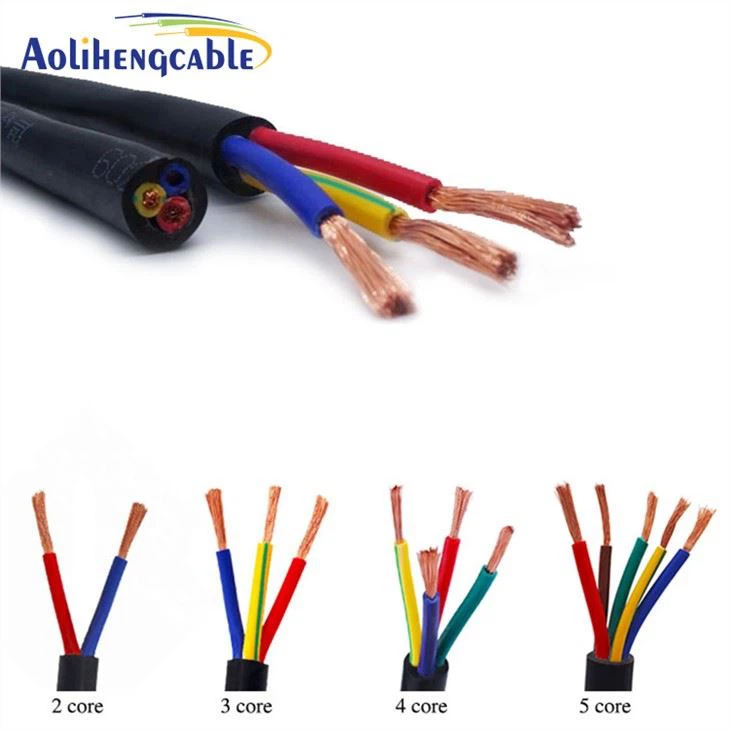
RVV wire comes in different configurations, such as different numbers of cores and cross - sectional areas. For example, you can find RVV2 Wire, which has two cores, and 3 Cores RVV Cable, which, as the name suggests, has three cores. There are also cables with more cores available to meet different electrical requirements. RVV Wire Cable is widely used in power supply systems, home appliances, and some low - power electrical equipment due to its flexibility and relatively low cost.
Factors to Consider for Motor Control
When it comes to motor control, several key factors need to be taken into account to determine the suitability of a wire. These factors include current - carrying capacity, voltage drop, flexibility, and protection against environmental factors.
Current - Carrying Capacity
Motors draw a significant amount of current, especially during startup. The wire used for motor control must be able to carry this current without overheating. The current - carrying capacity of RVV wire depends on its cross - sectional area. Larger cross - sectional areas can carry more current. For small motors with relatively low power requirements, RVV wire with an appropriate cross - sectional area may be sufficient. However, for high - power motors, the current demand may exceed the capacity of RVV wire, leading to overheating and potential damage to the wire and the motor.
Voltage Drop
Voltage drop is another critical factor in motor control. A large voltage drop can cause the motor to operate at a lower voltage than its rated value, resulting in reduced performance, increased energy consumption, and even motor failure. The resistance of the wire contributes to the voltage drop. RVV wire, being a flexible cable, has a certain resistance. The longer the wire length and the higher the current flowing through it, the greater the voltage drop. Therefore, when using RVV wire for motor control, it's essential to calculate the voltage drop and ensure it is within acceptable limits.
Flexibility
One of the advantages of RVV wire is its high flexibility. In some motor control applications, such as those where the motor or the wiring needs to move, flexibility is a valuable characteristic. For example, in robotic arms or some mobile equipment, the ability of the wire to bend and flex without breaking is crucial. RVV wire can easily adapt to these dynamic environments, ensuring continuous electrical connection.
Environmental Protection
Motors can be used in various environments, including those with high humidity, dust, or exposure to chemicals. The wire used for motor control must be able to withstand these environmental conditions. RVV wire has a PVC sheath, which provides some protection against moisture and dust. However, in harsh environments, additional protection may be required. For example, in a chemical - laden environment, the PVC sheath may be corroded over time, reducing the wire's performance and safety.
Suitability of RVV Wire for Different Types of Motors
Small DC Motors
Small DC motors, such as those used in toys, small fans, or some low - power electronic devices, typically have relatively low power requirements. These motors usually draw a small amount of current, and the voltage drop is not a major concern. In such cases, RVV wire can be a suitable choice. Its flexibility makes it easy to connect the motor to the power source and control circuit, and its relatively low cost makes it an economical option.
AC Induction Motors
AC induction motors are widely used in industrial and commercial applications. The power of these motors can vary from a few hundred watts to several kilowatts. For small - to - medium - sized AC induction motors, RVV wire may be used if the current - carrying capacity and voltage drop are carefully considered. However, for large - scale industrial motors, RVV wire may not be suitable due to its limited current - carrying capacity and potential for significant voltage drop.
Stepper Motors
Stepper motors are often used in precision control applications, such as in 3D printers and CNC machines. These motors require accurate control of current and voltage. RVV wire's flexibility can be an advantage in these applications, as it can be easily routed around the machine's components. However, the wire must be able to provide stable electrical signals. Any interference or voltage fluctuations can affect the motor's performance. Therefore, when using RVV wire for stepper motors, proper shielding and grounding may be necessary to ensure reliable operation.
Advantages and Disadvantages of Using RVV Wire for Motor Control
Advantages
- Flexibility: As mentioned earlier, the high flexibility of RVV wire makes it easy to install in complex wiring layouts and dynamic environments.
- Cost - effective: RVV wire is relatively inexpensive compared to some specialized motor control cables. This makes it an attractive option for budget - conscious projects.
- Availability: It is widely available in the market, making it easy to source in different configurations and lengths.
Disadvantages
- Limited Current - Carrying Capacity: As discussed, RVV wire may not be suitable for high - power motors due to its limited current - carrying capacity.
- Voltage Drop: The potential for significant voltage drop, especially over long wire lengths, can affect motor performance.
- Environmental Limitations: In harsh environments, the PVC sheath of RVV wire may not provide sufficient protection.
Conclusion
In conclusion, whether RVV wire can be used for motor control depends on the specific requirements of the motor and the application. For small - power motors with relatively low current demands and in less - demanding environments, RVV wire can be a viable option. Its flexibility and cost - effectiveness make it attractive in these cases. However, for high - power motors or those used in harsh environments, more specialized motor control cables may be necessary.
If you are considering using RVV wire for your motor control project or have any questions about our RVV wire products, please feel free to contact us for more information and to discuss your specific needs. We can provide you with detailed technical specifications and help you make the right choice for your application.
References
- Electrical Wiring Handbook, 5th Edition
- Motor Control and Protection Guide by IEEE