

How does 18 AWG speaker wire compare to 21 AWG in terms of power handling?
Nov 07, 2025
When it comes to setting up a high - quality audio system, the choice of speaker wire is often overlooked but can have a significant impact on the overall performance, especially in terms of power handling. As a supplier of 18 AWG Speaker Wire, I've had numerous customers ask about the differences between 18 AWG and 21 AWG speaker wires in this regard. In this blog, I'll delve into the technical details to help you understand how these two wire gauges compare.
Understanding AWG
First, let's clarify what AWG means. American Wire Gauge (AWG) is a standardized system used to measure the diameter of electrical conductors. The lower the AWG number, the thicker the wire. For instance, an 18 AWG wire is thicker than a 21 AWG wire. This difference in thickness has a direct impact on the wire's electrical properties, including its resistance and power - handling capacity.
Resistance and Its Impact on Power Handling
Resistance is a key factor when discussing power handling in speaker wires. According to Ohm's Law (V = IR, where V is voltage, I is current, and R is resistance), for a given voltage, a higher resistance wire will result in a lower current flow. In the context of speaker wires, resistance can cause power loss in the form of heat.
A thicker wire, like an 18 AWG, has lower resistance compared to a 21 AWG wire. Lower resistance means less power is wasted as heat, and more power can be efficiently transferred from the amplifier to the speakers. For example, if you have an amplifier that is capable of delivering 100 watts of power to your speakers, a lower - resistance 18 AWG wire will ensure that a larger portion of that 100 watts actually reaches the speakers, compared to a 21 AWG wire.
Power Handling Capability
The power - handling capability of a wire is closely related to its ability to carry current without overheating. A thicker 18 AWG wire can handle more current than a 21 AWG wire. This is because the larger cross - sectional area of the 18 AWG wire allows electrons to flow more freely, reducing the risk of overheating.
Let's consider a practical example. Suppose you have a high - power amplifier that can output a large amount of current. If you use a 21 AWG wire, which has a relatively high resistance, the wire may heat up quickly when carrying a large current. This not only wastes power but can also be a safety hazard, as overheating wires can potentially cause fires. On the other hand, an 18 AWG wire can handle the same current more safely and efficiently, ensuring that your audio system operates smoothly.
Distance and Power Handling
The length of the speaker wire also plays a crucial role in power handling. As the length of the wire increases, its resistance also increases. This means that for longer wire runs, the difference in power handling between 18 AWG and 21 AWG becomes even more pronounced.
For short distances, say less than 10 feet, the difference in power handling between 18 AWG and 21 AWG may be negligible. However, if you are running speaker wires over a distance of 20 feet or more, the 18 AWG wire will have a significant advantage. The lower resistance of the 18 AWG wire will help maintain the power delivery to the speakers, even over longer distances.
Audio Quality
In addition to power handling, the choice of wire gauge can also affect audio quality. A wire with lower resistance, such as 18 AWG, can provide a cleaner and more accurate audio signal. When less power is lost in the wire, the speakers receive a more faithful representation of the audio signal from the amplifier.
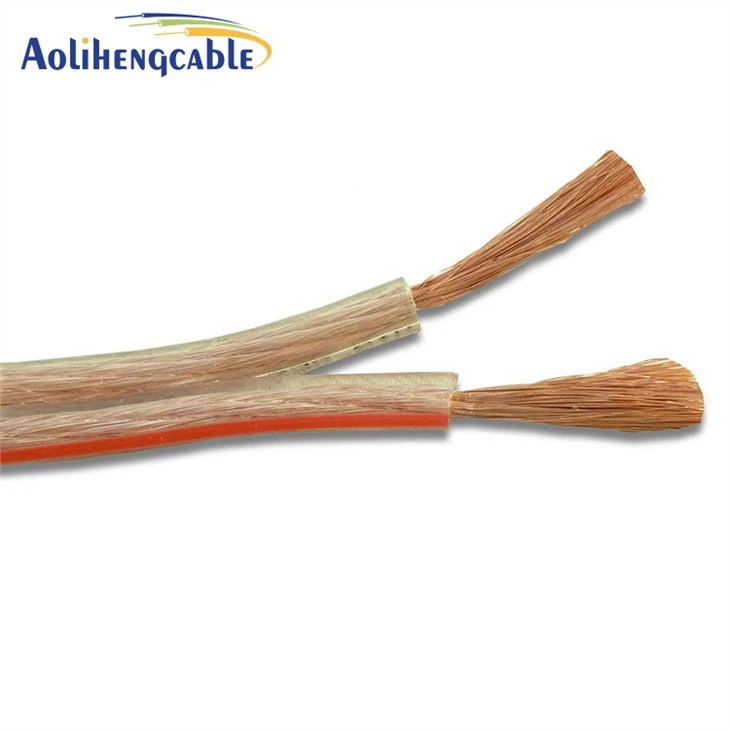

This can result in improved clarity, better bass response, and a more immersive listening experience. In contrast, a 21 AWG wire with higher resistance may introduce some distortion and loss of audio quality, especially at higher volumes.
Applications
The choice between 18 AWG and 21 AWG speaker wires depends on the specific application. For small - scale audio systems, such as a desktop speaker setup or a small home theater in a compact room, a 21 AWG wire may be sufficient. These systems typically have lower power requirements, and the short wire runs minimize the impact of resistance.
However, for larger audio systems, such as a professional sound setup for a concert hall or a high - end home theater with powerful speakers, 18 AWG wire is the better choice. The increased power - handling capacity and lower resistance of the 18 AWG wire ensure that the speakers receive the full power they need to produce high - quality sound.
Comparing with Other Gauges
It's also interesting to compare 18 AWG and 21 AWG with other common speaker wire gauges. For example, 22 Gauge Speaker Wire has an even higher resistance than 21 AWG, making it suitable only for very short runs and low - power applications. On the other hand, 10 AWG Speaker Wire has an extremely low resistance and can handle very high currents. It is often used in large - scale commercial audio installations or in high - power home audio systems with very long wire runs.
Conclusion
In conclusion, when it comes to power handling, 18 AWG speaker wire has a clear advantage over 21 AWG wire. Its lower resistance allows for more efficient power transfer, better power - handling capacity, and improved audio quality, especially over longer distances. While 21 AWG wire may be suitable for some low - power and short - distance applications, 18 AWG is the preferred choice for most medium - to high - power audio systems.
If you're in the market for high - quality speaker wires and want to ensure optimal power handling and audio performance, I invite you to consider our 18 AWG Speaker Wire. We're always ready to discuss your specific needs and help you make the right choice for your audio system. Contact us to start a procurement discussion and take your audio experience to the next level.
References
- "Electrical Wiring Handbook" by Tom Henry
- Ohm's Law principles from basic electrical engineering textbooks