

What is the difference between flat and round car battery cables?
Oct 17, 2025
As a seasoned supplier of Car Battery Cable, I've witnessed firsthand the critical role that battery cables play in a vehicle's electrical system. Among the various types available, flat and round car battery cables stand out as the most common choices for automotive applications. In this blog post, I'll delve into the differences between these two types of cables, exploring their unique characteristics, advantages, and disadvantages to help you make an informed decision for your vehicle.
Physical Structure
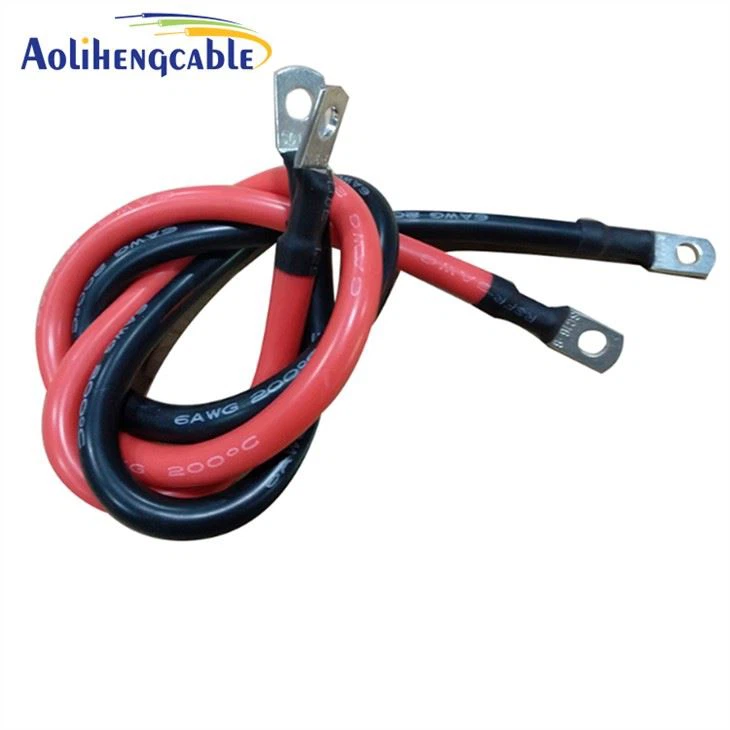
The most obvious difference between flat and round car battery cables lies in their physical structure. Round cables, as the name suggests, have a circular cross - section. They are typically made up of multiple strands of copper or aluminum wire bundled together and encased in an insulating material. This circular design allows for a more uniform distribution of the electrical current within the cable.
On the other hand, flat cables have a rectangular or oval cross - section. They are often constructed by laying multiple strands of wire side by side and then covering them with an insulating sheath. The flat shape gives them a more streamlined appearance and makes them easier to fit into tight spaces.
Flexibility
Flexibility is an important factor to consider when choosing a car battery cable, especially in applications where the cable needs to be routed around obstacles. Round cables generally offer greater flexibility compared to flat cables. The circular cross - section allows the cable to bend and twist more easily in any direction. This makes them ideal for use in vehicles where the battery is located in a hard - to - reach area or where the cable needs to follow a complex routing path.
Flat cables, while less flexible than round cables, can still be bent to a certain degree. However, their flat shape restricts the direction in which they can be bent. They are best suited for applications where the cable can be routed in a relatively straight line or where there are only minor bends required.
Current - Carrying Capacity
The current - carrying capacity of a cable refers to the amount of electrical current that it can safely carry without overheating. Both flat and round cables can be designed to handle different levels of current, but their performance can vary depending on their construction and size.
In general, round cables tend to have a higher current - carrying capacity per unit of cross - sectional area. This is because the circular shape allows for a more efficient distribution of the electrical current, reducing the resistance within the cable. As a result, round cables can carry more current without generating as much heat.

Flat cables, on the other hand, may have a slightly lower current - carrying capacity per unit of cross - sectional area. However, they can be designed with a larger cross - sectional area to compensate for this. In some cases, flat cables can be made wider to increase their current - carrying capacity, making them suitable for high - power applications.
Installation
Installation is another aspect where flat and round car battery cables differ. Round cables are relatively easy to install, especially in vehicles with standard battery compartments. Their circular shape allows them to be easily connected to battery terminals using standard cable clamps. They can also be routed through holes and conduits without much difficulty.
Flat cables, on the other hand, require a bit more care during installation. Their flat shape means that they need to be properly aligned when connecting to the battery terminals to ensure a good electrical connection. Additionally, they may require special cable clamps or connectors that are designed to fit their unique shape. However, the flat design can also make them easier to install in tight spaces where round cables may not fit.
Durability
Durability is crucial for car battery cables, as they are exposed to a variety of harsh conditions, including heat, vibration, and chemical exposure. Both flat and round cables can be made to be durable, but their resistance to damage can vary.
Round cables are generally more resistant to mechanical damage, such as abrasion and impact. The circular shape provides a more robust structure that can withstand bending and twisting without breaking the internal wires. Additionally, the insulating material on round cables is often thicker, providing better protection against environmental factors.
Flat cables, while still durable, may be more susceptible to damage from sharp objects or excessive bending. The flat shape makes them more likely to be cut or punctured if they come into contact with a sharp edge. However, some flat cables are designed with reinforced insulation to improve their durability.
Cost
Cost is always a consideration when purchasing car battery cables. The cost of both flat and round cables can vary depending on their size, material, and brand. In general, round cables tend to be more cost - effective, especially for standard applications. They are widely available in the market, and the manufacturing process is relatively simple, which helps to keep the cost down.
Flat cables, on the other hand, may be more expensive due to their specialized design and manufacturing process. The need for special connectors and the additional steps required to ensure proper alignment during installation can also add to the overall cost.
Applications
The choice between flat and round car battery cables often depends on the specific application. Round cables are commonly used in a wide range of vehicles, from cars and trucks to boats and RVs. Their flexibility and high current - carrying capacity make them suitable for most automotive applications. They are also a popular choice for aftermarket battery upgrades and custom installations.
Flat cables are typically used in applications where space is limited, such as in some modern cars with compact battery compartments or in electronic devices where the cable needs to be integrated into a small space. They are also used in some high - end automotive applications where a more aesthetically pleasing appearance is desired.
Conclusion
In conclusion, both flat and round car battery cables have their own unique advantages and disadvantages. When choosing a cable for your vehicle, it's important to consider factors such as flexibility, current - carrying capacity, installation requirements, durability, and cost. If you need a cable that is highly flexible and can handle high currents, a round cable may be the best choice. On the other hand, if space is a concern and you can tolerate a slightly lower current - carrying capacity, a flat cable may be more suitable.
As a Car Battery Cable supplier, I offer a wide range of both flat and round cables to meet the diverse needs of my customers. Whether you're looking for a 8 Gauge Battery Cable for a standard car battery or a Car Battery Connection Wire for a custom installation, I can provide you with high - quality products at competitive prices.
If you're interested in learning more about our car battery cables or have any questions about which type of cable is right for your vehicle, please don't hesitate to contact me. I'm always happy to assist you in making the best choice for your automotive electrical needs.
References
- "Automotive Electrical Systems" by Thomas D. Gillespie
- "Handbook of Electric Power Calculations" by Hadi Saadat