

What is the difference between Internet Wire used in office and home?
Jul 16, 2025
When it comes to setting up a reliable internet connection, the choice of Internet Wire plays a crucial role. As an Internet Wire supplier, I've had the opportunity to witness firsthand the distinct requirements and differences between the Internet Wires used in office and home environments. In this blog, I'll delve into these differences, exploring the factors that influence the selection of Internet Wires for each setting.
Performance Requirements
In an office setting, the demand for high - speed and stable internet is often much higher than in a home. Offices typically have multiple users simultaneously accessing the network for various tasks such as video conferencing, large - file transfers, and running business - critical applications. For example, a marketing agency might be uploading high - resolution videos to their clients, while a financial firm could be processing real - time stock market data.
To meet these demands, office Internet Wires usually need to support higher bandwidths. Category 6 (Cat6) or even Category 6a cables are commonly used in offices. Cat6 cables can support speeds of up to 10 Gigabits per second (Gbps) over a distance of 100 meters, making them suitable for most office LAN (Local Area Network) setups. The higher - grade cables also have better shielding to reduce electromagnetic interference (EMI), which is essential in an office environment where there are numerous electronic devices operating simultaneously.
On the other hand, home users generally have less strenuous performance requirements. Most home activities involve web browsing, streaming videos, and occasional online gaming. While some households may have multiple smart devices connected to the network, the overall data traffic is typically lower compared to an office. As a result, Category 5e (Cat5e) cables are often sufficient for home use. Cat5e cables can support speeds of up to 1 Gbps, which is more than enough for the average home internet usage. You can learn more about different types of Internet Wires on our website Internet Wire.
Network Complexity
Office networks are usually more complex than home networks. In an office, there may be multiple departments, each with its own set of network requirements. For instance, the IT department may need a dedicated high - speed network for server management, while the sales team may require easy access to cloud - based customer relationship management (CRM) systems.
This complexity often leads to the use of structured cabling systems in offices. Structured cabling involves a standardized approach to cabling, where cables are organized in a hierarchical manner. It includes components such as patch panels, switches, and routers, all interconnected by high - quality Internet Wires. The structured cabling system allows for easy expansion and maintenance of the network, as new devices can be added or existing ones can be reconfigured without significant disruptions.
In contrast, home networks are relatively simple. They usually consist of a single router connected to a modem, with devices such as laptops, smartphones, and smart TVs connected wirelessly or via Ethernet cables. There is less need for a complex cabling infrastructure, and the focus is more on providing a basic and reliable internet connection throughout the home.
Environmental Factors
The physical environment in an office and a home can also impact the choice of Internet Wires. Offices are often located in commercial buildings with strict building codes and regulations. These buildings may have raised floors or ceiling plenums for cable management. In such cases, plenum - rated cables are required. Plenum - rated cables have special fire - resistant jackets that prevent the spread of fire and toxic fumes in the air - handling spaces of a building.
Moreover, offices may have a more industrial - like environment with higher levels of electrical noise. As mentioned earlier, the need for better shielding in office Internet Wires is to counteract this noise. Shielded twisted - pair (STP) cables are sometimes used in offices, especially in areas where EMI is a significant concern.
In a home environment, the risk of fire and EMI is generally lower. However, if the home has a large outdoor area and the Internet Wire needs to be run outside, UTP Outdoor Cable may be required. These cables are designed to withstand outdoor conditions such as moisture, sunlight, and temperature variations.
Cost Considerations
Cost is always an important factor in any purchasing decision. In an office, the cost of Internet Wires is often a secondary consideration compared to performance and reliability. Since the network is crucial for the business operations, companies are willing to invest in high - quality cables to ensure smooth and uninterrupted internet access. The cost of installing a structured cabling system in an office can be significant, but it is seen as a long - term investment.
In a home, cost is usually a more significant factor. Homeowners are more likely to look for budget - friendly options that can still meet their basic internet needs. Cat5e cables are not only sufficient for most home uses but are also more affordable compared to higher - grade cables like Cat6 or Cat6a.
Installation and Maintenance
Installing Internet Wires in an office can be a complex and time - consuming process. It often requires the services of professional installers who are familiar with structured cabling systems and building codes. The installation may involve running cables through walls, floors, and ceilings, and terminating them at patch panels and switches. Additionally, regular maintenance is necessary to ensure the proper functioning of the network. This includes tasks such as cable testing, troubleshooting, and replacing damaged cables.
In a home, the installation of Internet Wires is much simpler. Homeowners can usually install Ethernet cables themselves, following basic instructions. There is also less need for regular maintenance, as the network is less complex and has fewer components.
Future - Proofing
Offices need to be future - proofed to accommodate the ever - increasing demands of technology. As businesses grow and adopt new technologies such as artificial intelligence, big data analytics, and the Internet of Things (IoT), the network infrastructure needs to be able to handle the additional data traffic. This is why offices often invest in higher - grade Internet Wires and structured cabling systems that can support future upgrades.
In a home, future - proofing is also important, but to a lesser extent. Homeowners may want to consider upgrading to Cat6 cables if they plan to install high - speed fiber - optic internet in the future or if they expect to have more smart devices connected to the network. However, the pace of technological change in a home environment is generally slower compared to an office.
Conclusion
In summary, the differences between Internet Wires used in offices and homes are significant. Offices require high - performance, complex, and environmentally - compliant Internet Wires to meet the demands of a busy and technology - driven workplace. Homes, on the other hand, need more budget - friendly and simple solutions that can provide a reliable internet connection for everyday use.

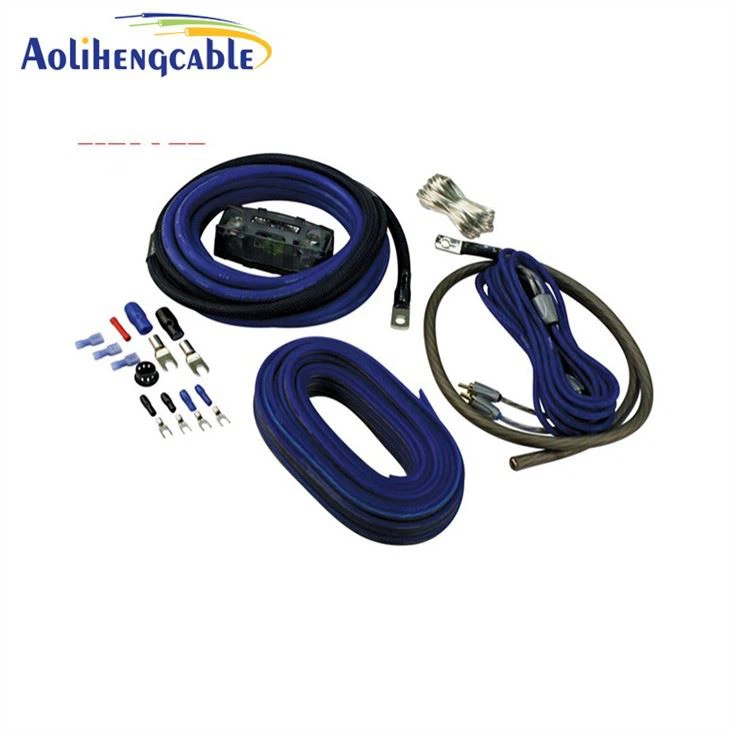
As an Internet Wire supplier, we understand these differences and can provide the right products for both office and home applications. Whether you are setting up a new office network or upgrading your home internet, we have a wide range of Internet Wires and related products, including Car Audio Wiring Kit, to meet your specific needs.
If you are interested in purchasing Internet Wires for your office or home, please feel free to contact us for a detailed consultation. Our team of experts will be happy to assist you in choosing the right products and providing professional advice on installation and maintenance.
References
- "Network Cabling: A Comprehensive Guide" by David Groth
- "Structured Cabling for Dummies" by Mark A. Stibich