

What is the signal attenuation of RVV Wire?
Oct 30, 2025
Hey there! As a supplier of RVV wire, I often get asked about signal attenuation in RVV wire. So, I thought I'd write this blog to share what I know about it.
First off, let's talk about what RVV wire is. RVV wire, also known as PVC sheathed flexible cable, is widely used for power supply and signal transmission in various electrical and electronic devices. It's popular because it's flexible, easy to install, and can handle different voltage levels. We offer different types of RVV wire, like the RVV2 Wire, 3 Cores RVV Cable, and RVV Wire Cable.
Now, what is signal attenuation? Signal attenuation refers to the reduction in the strength of a signal as it travels through a medium, in this case, the RVV wire. It's kind of like when you shout from a distance, and the sound gets weaker the farther it travels. In the world of electrical signals, this attenuation can cause problems like a loss of data, poor signal quality, or even a complete signal failure.
There are several factors that can cause signal attenuation in RVV wire. One of the main factors is the resistance of the wire. Just like water flowing through a pipe, the electrons in the electrical signal encounter resistance as they move through the wire. The longer the wire, the more resistance the signal has to overcome, and the more it gets attenuated. For example, if you use a very long length of RVV wire to transmit a signal, you'll likely notice a significant drop in the signal strength at the receiving end.
Another factor is the frequency of the signal. Higher frequency signals tend to experience more attenuation than lower frequency signals. This is because higher frequency signals have more energy and interact more with the material of the wire. So, if you're using RVV wire to transmit high - frequency signals, you need to be extra careful about signal attenuation.
The cross - sectional area of the wire also plays a role. A wire with a larger cross - sectional area has less resistance, which means less signal attenuation. It's like having a wider pipe for water to flow through; there's less resistance to the flow. So, if you want to reduce signal attenuation, you can choose an RVV wire with a larger cross - sectional area.
The insulation material of the RVV wire can also affect signal attenuation. Some insulation materials are better at reducing interference and allowing the signal to pass through with less loss. For instance, high - quality PVC insulation can provide better protection against signal loss compared to lower - quality insulation.
Now, let's talk about how to deal with signal attenuation in RVV wire. One way is to use amplifiers. Amplifiers can boost the signal strength along the way, compensating for the loss due to attenuation. They're like little boosters that give the signal a new push to keep it going strong.
Another option is to use repeaters. Repeaters receive the attenuated signal, regenerate it, and then send it out again. This way, the signal can travel longer distances without significant loss.
Proper grounding is also crucial. Grounding helps to reduce interference and can improve the overall signal quality. It's like providing a safe path for any unwanted electrical noise to go away.
When it comes to choosing the right RVV wire for your application, you need to consider the distance of signal transmission, the frequency of the signal, and the required signal strength. If you're dealing with long - distance transmission of high - frequency signals, you might want to go for a wire with a larger cross - sectional area and high - quality insulation.
As a supplier, I understand the importance of getting the right RVV wire for your needs. We have a wide range of RVV wires that are designed to minimize signal attenuation. Whether you need a RVV2 Wire for a small - scale project or a 3 Cores RVV Cable for a more complex installation, we've got you covered.
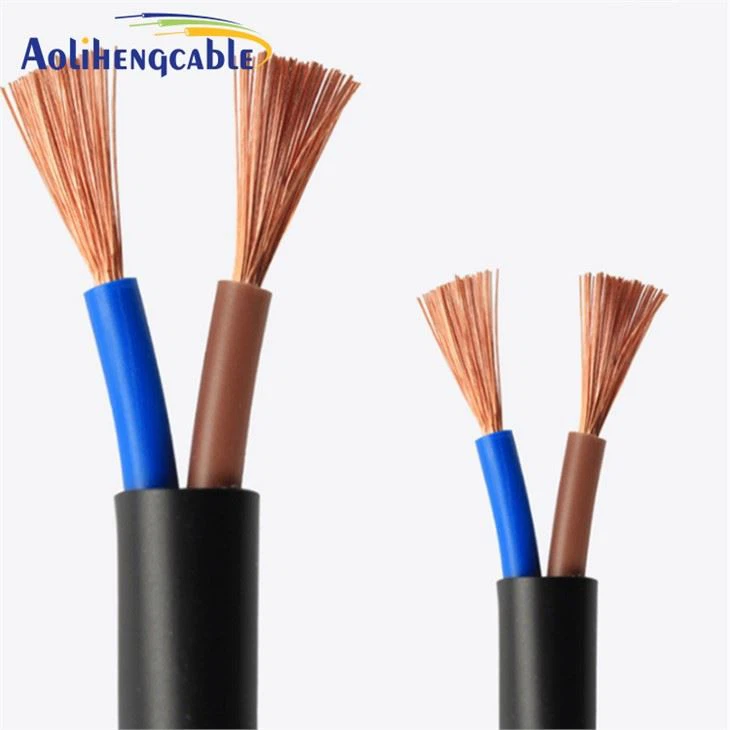

If you're interested in our RVV wire products and want to learn more about how we can help you with your signal transmission needs, don't hesitate to reach out for a purchase negotiation. We're here to provide you with the best solutions and ensure that your projects run smoothly.
In conclusion, signal attenuation in RVV wire is a real thing, but with the right understanding of the factors causing it and the appropriate measures to deal with it, you can minimize its impact. Whether you're an electrician, an engineer, or someone working on a DIY project, choosing the right RVV wire and taking steps to reduce attenuation is essential for a successful signal transmission.
References
- Electrical Engineering Handbook, McGraw - Hill
- Principles of Electric Circuits: Conventional Current Version, Thomas L. Floyd